

Tazio Trends: What using a platform like Tazio is really like – a graduate guide

For many graduates, the recruitment process can be a daunting one. They’re likely to be stepping into it for the first time and taking assessments they’re unfamiliar with.
The good news for graduates and employers is that platforms like ours are designed to level the playing field. They give everybody the chance to show their potential regardless of where they come from or who they know.
Our Head of Sales and Solutions, Justin Somerville-Cotton, recently visited the University of Kent to talk to students about what the hiring process looks like on Tazio and how to give themselves the best chance of succeeding.
The feedback he got was so positive we thought we’d share a snapshot of his insights here.
This is not a trick question: what employers are looking for
Most graduate schemes follow a similar journey:
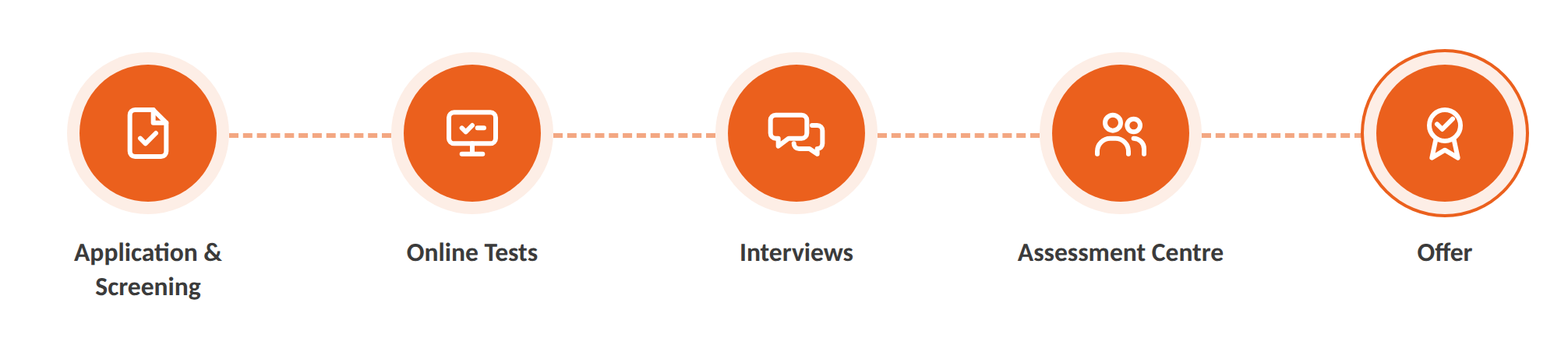
At each stage, the number of candidates reduces significantly as employers move from large-scale screening to more detailed assessments.
Each assessment will usually try to measure one of four things:
- Can you think and reason effectively?
- How do you behave in workplace situations?
- Are your preferences and motivations aligned with the role?
- Can you actually perform the work itself?
There aren’t any trick questions. The goal is to show employers how someone might perform in the real-world situations they’re likely to encounter in a role.
We’re often asked what role AI plays. The answer is none at all when it comes to making decisions. We use it to support high-volume processes such as screening, scheduling, transcription and identifying potential fraud, but not for assessing candidates.
For candidates, AI can be a useful preparation tool for research, practice questions and feedback. However, relying on AI-generated answers for applications or assessments is risky, particularly if you can't confidently explain what you've submitted later on.
Tips for each stage of the process
Stage 1: Application and screening
This is where the biggest reduction in candidate numbers often happens.
Employers typically check eligibility requirements such as graduation year, right to work status, location and any mandatory criteria listed in the job advert. You may also be asked to provide some written answers about your motivation for applying and previous experience.
If you’re asked to provide any written answers at this stage, recruiters will use predefined criteria to score them.
Here’s an example question:
Can you tell us about a time you worked as part of a team to achieve a goal?
This question is looking for attributes such as teamwork, communication and problem solving, as well as the result they help achieved.
❎ A vague answer that doesn’t highlight those attributes would score poorly. Such as: "I enjoy working with people and have done lots of group work at university."
✅ A better answer would be: "At university, I worked with four others on a marketing project. I organised weekly meetings, helped resolve disagreements about our approach, and created the final presentation. We achieved the highest grade in the class."
Give yourself the best chance:
- Apply early. Many schemes recruit on a rolling basis.
- Check eligibility requirements carefully before applying.
- Use language that reflects the role and advert naturally, rather than trying to crowbar lots of keywords in.
- Tailor responses to the specific employer.
- Answer the question being asked, not the one you wish had been asked.
- Complete applications in full and stay within word counts.
Stage 2: Tests and questionnaires
Online assessments are often the stage candidates worry about most. But platforms like Tazio make them easy to take and give you opportunities to practise before starting. You can also find practice questions online.
Employers may use aptitude tests, situational judgement tests (SJTs), personality questionnaires or gamified assessments to understand reasoning ability, judgement and work preferences.
For example, a situational judgement test (SJT) question could be:
You’re three weeks into your graduate role. A client asks you for a report by Friday. You realise on Wednesday that the data you were given is wrong, and the colleague who owns it is on leave until Monday.
Which of the following is the most effective way forward?:
A. Rebuild the dataset yourself from the source files and send the report on Friday as promised.
B. Tell your manager today, set out the options, and agree with them what the client is told.
C. Send the report on Friday with a note flagging that the figures are unverified.
D. Message your colleague and wait for them to reply before doing anything else.
The answers range from most effective to least effective in this order: B, A, C, D.
B is the best answer because you have escalated the problem early, provided solutions without going beyond your remit and made sure the client is managed effectively.
Give yourself the best chance:
- Practise before sitting the real assessment.
- Focus on accuracy and pacing rather than trying to complete every question.
- In SJTs, think about accountability, collaboration and acting within your remit, rather than taking on all the responsibility yourself.
- Be honest in personality questionnaires rather than trying to guess the "right" answer.
- Complete assessments in a quiet environment on a laptop. Rather than on your phone on the bus.
- Ask for any adjustments you need, such as increased time, before starting.
Stage 3: Interviews
Whether they're live or pre-recorded, interviews are usually far more structured than candidates realise.
Employers often score against defined competencies, with interviewers looking for evidence and examples that demonstrate specific behaviours. These competencies are often listed on an employer’s careers website – it’s worth checking them out.
When preparing for interviews, focus on examples that demonstrate your skills in action. A good answer explains the challenge you faced, what you did, the impact of your actions and what you learned from the experience.
Give yourself the best chance:
- Check the interview format, timing and retake rules beforehand.
- Prepare examples against competencies rather than memorising answers to likely questions.
- Focus on what you did and explain the outcome and impact of your actions, so they have evidence of your contribution.
- Get to the point quickly before adding context.
- In video interviews, look at the camera lens and use any practice questions available.
Stage 4: Assessment Centres
Assessment centres combine multiple exercises and multiple assessors to create a broader picture of each candidate.
Activities may include group exercises, presentations, case studies, interviews and work-sample tasks. The goal isn't perfection. It's gathering evidence across a range of situations.
One of the most valuable tasks in terms of predicting performance is the work sample. This could be a written task or a role play, such as analysing data or dealing with an angry customer. It’s an opportunity to show you have what it takes to thrive in the role regardless of qualifications or grades.
Give yourself the best chance:
- In group exercises, collaborate rather than compete. Dominating the room is just as likely to get you marked down as saying nothing.
- Help bring quieter participants into the discussion and summarise progress when discussions stall.
- Challenge ideas constructively and offer alternatives, setting out your reasoning.
- Listen to or read every task carefully to make sure you’re answering the right question.
- Keep within time limits. Doing something brilliantly in double the hours will be noticed.
- Ask what tools you can use, such as AI, before you start on a task.
Myth busting recap
Let's finish by recapping some of the most common misconceptions about the graduate recruitment process.
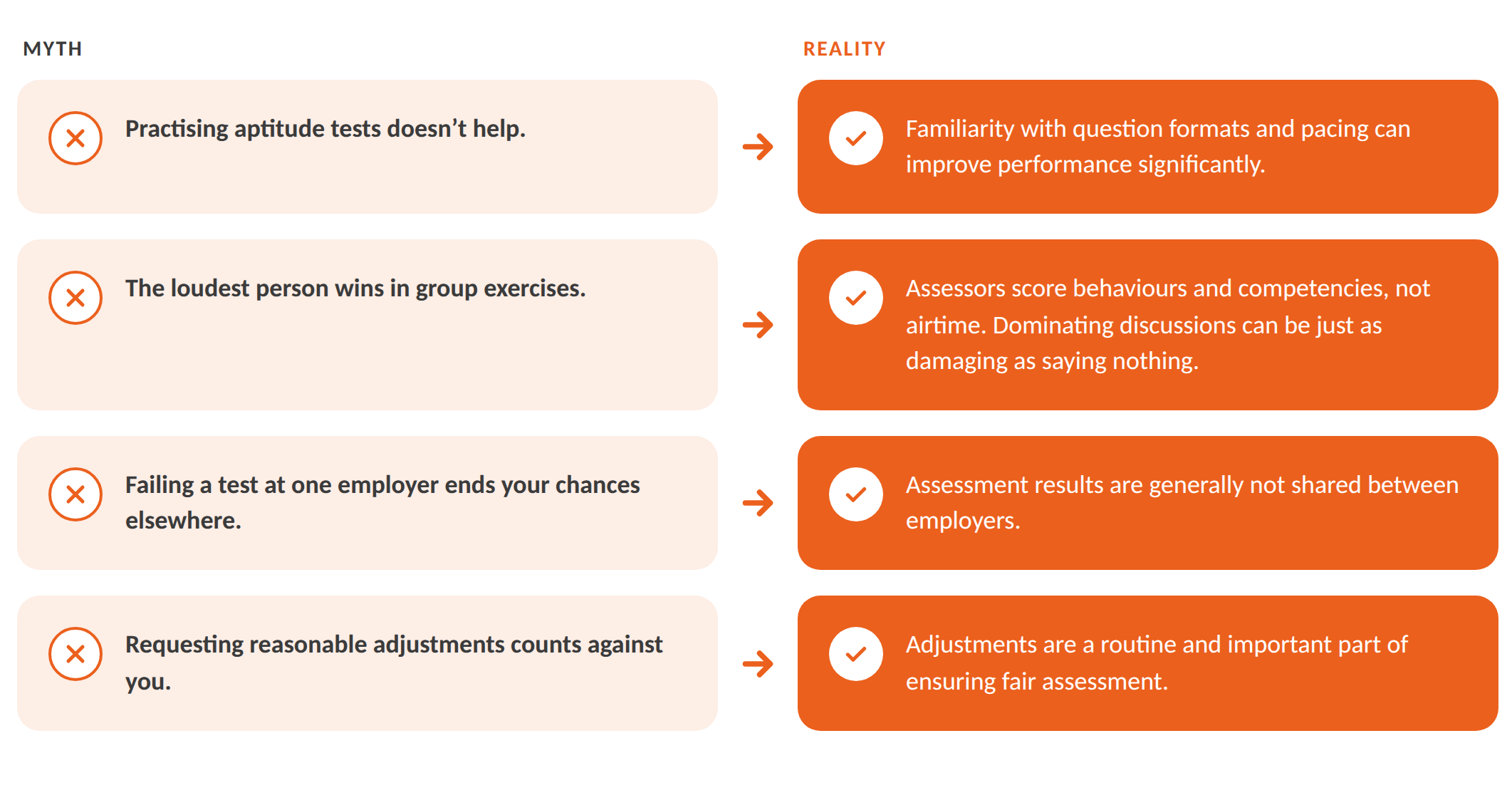
Ultimately, success isn't about finding ways to beat the assessment process. It's about understanding what employers are looking for and using every stage as an opportunity to showcase your skills, strengths and potential.
As always, our mission is to empower you to make smarter, faster hiring decisions and create exceptional experiences for your candidates. Stay connected with us on LinkedIn for the latest news and resources.
If you have any thoughts on this edition of Tazio Trends or want to find out more about our platform, it would be great to hear from you.


